How to Clean a Fish Tank Properly Without Killing Fish
How to clean a fish tank properly without killing fish, as keeping a fish tank clean is one of the most important parts of fish care. Also, it is one of the easiest places to make mistakes. A tank that is cleaned too aggressively can destroy the balance that keeps fish alive and healthy. Many beginners think that “clean” means removing every bit of dirt, scrubbing every surface, and replacing all the water at once. In reality, that kind of deep cleaning can shock fish, remove beneficial bacteria, and create dangerous changes in water chemistry.
A healthy aquarium is not a sterile environment. It is a living ecosystem. Fish, plants, filter bacteria, and water chemistry all work together. The goal of cleaning is not to start over every time. The goal is to maintain stability by removing waste, excess algae, uneaten food, and debris before they become problems.
This article explains how to properly clean a fish tank without harming the fish. You will learn how often to clean, what tools to use, how to clean gravel, decorations, glass, and filters, and how to avoid the most common mistakes that cause fish stress or death. Whether you have a small beginner aquarium or a larger home tank, these methods will help you keep your fish safe while maintaining a clear, healthy, and attractive aquarium.
How to Clean a Fish Tank Properly – Why Fish Tank Cleaning Must Be Done Carefully
Fish live in water all the time, so even small changes in that water can affect them quickly. Unlike people, fish cannot escape poor water conditions. If the tank becomes dirty, ammonia and nitrite can rise, oxygen can drop, and fish can become stressed or sick. But if you clean too hard, you can also harm the tank by removing the helpful bacteria that process waste.
These beneficial bacteria live mostly in the filter media, gravel, decorations, and other surfaces inside the aquarium. They break down fish waste in a biological cycle. First, fish waste produces ammonia. Then helpful bacteria convert ammonia into nitrite, and then into nitrate. Nitrate is less toxic, though it still must be controlled with regular partial water changes.
If you wash everything with tap water, scrub all surfaces too hard, or replace all the water at once, you can disturb this biological balance. The result may be a mini-cycle in which harmful ammonia and nitrite spike. That can stress fish, damage their gills, reduce oxygen uptake, and even kill them.
The safest way to clean a tank is to do it gradually and gently.
How to Clean a Fish Tank Properly – Signs Your Fish Tank Needs Cleaning
A fish tank does not always need the same level of cleaning. Some tanks require more frequent maintenance than others, depending on stocking, feeding, filtration, and the presence of live plants. Here are common signs that cleaning is needed:
- The glass has algae buildup.
- Uneaten food lies at the bottom.
- Fish waste is visible on the substrate.
- The water looks cloudy, yellow, or dirty.
- The tank smells bad.
- Fish are gasping at the surface.
- Plants are rotting or decaying.
- The filter flow is weaker than usual.
- Nitrate levels are rising.
- Fish seem stressed, sluggish, or less active.
If you notice these signs, do not panic and do not try to fix everything at once. A careful cleaning routine is safer than a dramatic cleanup.
How to Clean a Fish Tank Properly – How Often Should You Clean a Fish Tank?
The answer depends on tank size, number of fish, fish type, plants, and filter strength. A lightly stocked, well-filtered tank may only need partial water changes once a week or every two weeks. A heavily stocked tank may require more frequent attention.
A simple schedule looks like this:
- Daily: Check fish behaviour, temperature, filter operation, and feeding amount.
- Every few days: Remove visible waste or uneaten food if needed.
- Weekly: Perform a partial water change and light cleaning.
- Every 2 to 4 weeks, rinse the filter media carefully if needed.
- Monthly or as needed: Clean glass, decorations, and substrate more thoroughly.
Do not follow a rigid schedule without looking at the tank itself. Some tanks stay clean longer, while others build up waste quickly. The condition of the water and the behaviour of the fish matter more than the calendar alone.
How to Clean a Fish Tank Properly – What You Need Before Cleaning
Before you begin, gather the right tools. Having everything ready prevents rushing, which is one of the main reasons fish get stressed during maintenance.
Useful tools include:
- A bucket used only for aquarium maintenance
- A gravel vacuum or siphon
- Clean towels
- An algae scrubber or sponge is safe for aquarium glass
- A water conditioner or dechlorinator
- A thermometer
- A net, if needed
- Replacement water at the correct temperature
- A small brush for decorations or filter parts
- Test kits for ammonia, nitrite, nitrate, and pH
Never use soap, detergent, or household cleaners inside the aquarium. Even a tiny residue can poison fish. Anything that touches the tank should be fish-safe and free of chemicals.
How to Clean a Fish Tank Properly – Step 1: Prepare the Replacement Water First
One of the most important parts of safe tank cleaning happens before you touch the aquarium. Prepare the new water first so it is ready when you need it.
Use tap water only if you treat it with a water conditioner that removes chlorine and chloramine. These chemicals can harm fish and destroy beneficial bacteria. Also, make sure the new water is close to the tank’s temperature. Large temperature swings can shock fish.
If your tank water is room temperature and the replacement water is much colder or warmer, fish may become stressed. The safest approach is to match the temperature as closely as possible.
If you are using a bucket, fill it ahead of time, add dechlorinator, and let it sit until it reaches the right temperature. This simple step reduces stress and makes the whole process smoother.
How to Clean a Fish Tank Properly – Step 2: Turn Off Equipment if Needed
Before cleaning, some equipment may need to be temporarily turned off. This usually includes heaters and filters during water changes, especially if the water level will drop below the intake or heater line.
However, do not leave the fish tank without filtration for too long. The filter helps oxygenate the water and maintain bacterial activity. Turn the equipment back on as soon as the water change is complete and the water level is safe.
If you have an air pump or other life-support equipment, make sure it remains running if possible, especially during longer cleaning sessions.
Step 3: Remove Uneaten Food and Visible Waste
Start by removing any visible, uneaten food, decaying plant matter, or large waste particles. A small net, siphon, or turkey baster can help remove debris without disturbing the tank too much.
This step is important because the decomposition of waste releases ammonia. The longer it sits in the tank, the more the water quality suffers. Removing waste early helps reduce strain on the filter and keeps the tank cleaner overall.
Be gentle. You are not trying to strip the tank bare. Just remove obvious waste that could foul the water.
Step 4: Clean the Glass Without Using Chemicals
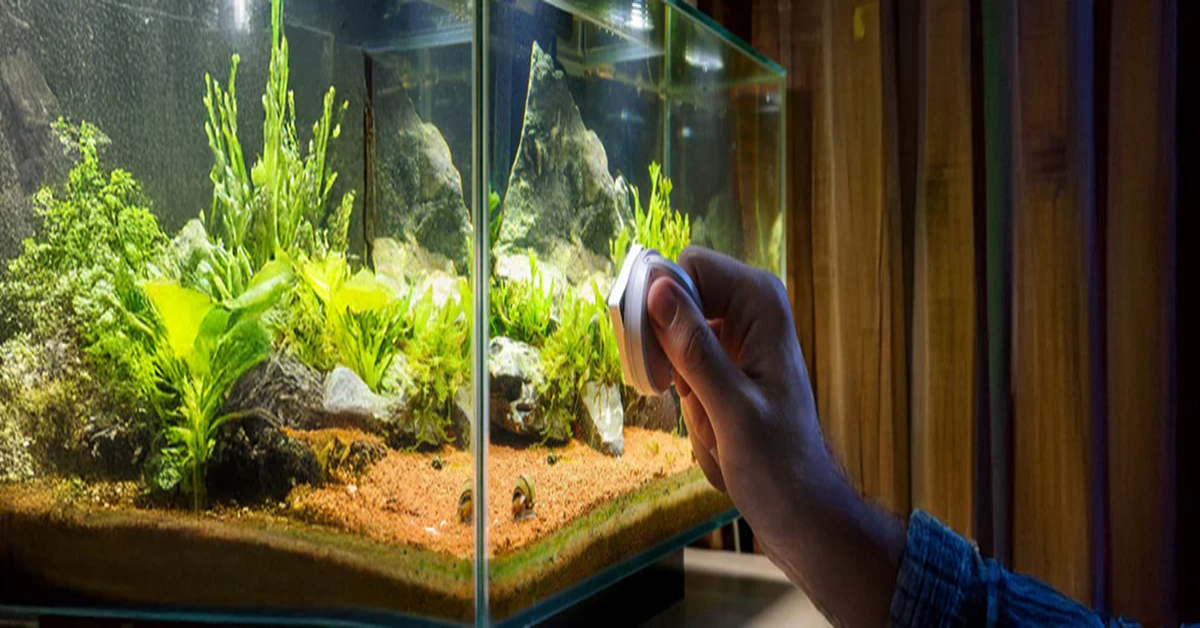
Algae on the glass is common and usually harmless in small amounts, but too much makes the tank look dirty and blocks light. Use an aquarium-safe algae scrubber, sponge, or magnetic cleaner to remove buildup from the inside glass.
Do not use kitchen scrub pads, soap, or any tool that has been used with household cleaning products. Even small residues can be dangerous.
Clean with smooth, gentle motions. If algae is stubborn, soak the area with tank water and scrub again. For external glass, use a dry microfiber cloth or a cloth lightly dampened with water only. Avoid using glass cleaners unless you are certain they will not come into contact with the tank water.
Step 5: Vacuum the Gravel or Substrate
This is one of the most important parts of properly cleaning a fish tank. Waste often settles into the substrate, where it can break down and pollute the water. A gravel vacuum or siphon lets you remove debris while doing a partial water change.
Move the vacuum slowly across the substrate. The goal is to lift waste without removing all the beneficial material in the tank. If you have gravel, gently push the vacuum into it and let the suction pull up debris. If you have sand, keep the vacuum slightly above the surface, or use a gentler method to avoid removing too much sand.
Do not deep-clean the entire substrate all at once unless the tank is severely neglected. In a healthy tank, it is better to clean one section at a time during each maintenance session. This preserves beneficial bacteria and reduces stress on the aquarium environment.
Step 6: Perform a Partial Water Change
A partial water change is one of the safest and most effective ways to maintain a healthy tank. In most tanks, changing about 10 to 25 per cent of the water at a time is enough. Heavier stockings may require more, but large changes should be done carefully.
Partial water changes remove waste chemicals such as nitrates and replenish minerals without shocking the fish. Changing all the water is usually unnecessary and often harmful unless there is an emergency.
When draining water, use a siphon or vacuum to draw dirty water into a bucket. Remove only a portion of the tank water, not all of it. Once the old water is removed, slowly add the prepared new water at the same temperature.
Pour new water gently to avoid disturbing fish or substrate. Some people place a plate or bowl in the tank and pour the new water onto it to reduce the force.
Step 7: Clean Decorations Gently
Decorations, rocks, driftwood, and ornaments can collect algae and debris. They do not need to look brand new. In fact, some biofilm and growth are normal. Clean them only when the buildup becomes excessive.
Remove one decoration at a time if needed and rinse it in old tank water, not tap water. A soft brush can help loosen algae. Avoid soaking decorations in harsh chemicals. If a decoration has sharp edges, cracks, or peeling paint, replace it rather than scrubbing it aggressively.
If you have live plants attached to decorations or hardscape, be extra careful. Roots and leaves can be damaged easily. Trim dead leaves and remove only what is clearly decaying.
Step 8: Clean the Filter Carefully
The filter is one of the most important parts of the aquarium because it holds most of the beneficial bacteria. Cleaning it incorrectly can collapse the biological balance. Never wash all filter media under untreated tap water at the same time.
Instead, rinse filter sponges, pads, or media gently in a bucket of old tank water that you removed during the water change. This helps remove debris without killing too many bacteria. If your filter uses multiple media types, clean only one part at a time if possible.
Do not replace all filter media at once unless absolutely necessary. Replacing everything can erase the bacterial colony and force the tank to cycle again. If a filter cartridge must be replaced, consider keeping some of the old media in the filter to maintain bacterial presence.
Also, clean the impeller and intake area if they are clogged. A weak filter flow often indicates debris buildup, which can affect oxygenation and water movement.
Step 9: Refill the Tank Slowly
After the tank has been partially drained and cleaned, it is time to refill it. This should be done slowly and gently. Sudden changes can stress fish, stir up debris, or alter the temperature too quickly.
Make sure the replacement water is treated and close to the tank temperature. Add it gradually. Watch the fish as you refill to make sure they are not reacting badly.
Once the water level is back to normal, turn the equipment back on. Confirm that the heater, filter, and air pump are working properly.
Step 10: Observe the Fish After Cleaning
The cleaning is not finished until you check the fish afterwards. Healthy fish should resume normal swimming and behaviour soon after maintenance. Watch for signs of stress such as:
- Gasping at the surface
- Hiding more than usual
- Rapid gill movement
- Darting or panic swimming
- Clamped fins
- Loss of balance
- Lethargy
Some fish may behave a little differently for a short time after cleaning, especially if the tank environment has changed slightly. But if they seem distressed for a long period, test the water immediately for ammonia, nitrite, nitrate, and temperature issues.
How to Clean a Fish Tank Properly Without Killing Fish – Common Mistakes That Kill Fish During Tank Cleaning
Many fish deaths after cleaning are preventable. Here are the most common mistakes to avoid.
1. Replacing all the water at once
This can shock fish and destabilise the tank.
2. Washing filter media under tap water
This may kill beneficial bacteria and trigger a cycle crash.
3. Using soap or chemicals
Even tiny amounts of cleaning products can poison fish.
4. Cleaning everything on the same day
If you clean the gravel, decorations, filter, and water all at once, the tank can lose too much of its biological balance.
5. Forgetting to treat tap water
Untreated water may contain chlorine or chloramine.
6. Matching the wrong temperature
Cold or hot replacement water can shock fish.
7. Overcleaning
A tank does not need to look brand new to be healthy.
8. Feeding too much before cleaning
Extra food creates extra waste, making cleaning harder and the water dirtier.
9. Disturbing fish too much
Chasing them with a net or rearranging the whole tank can create severe stress.
10. Replacing all media and substrate at once
This removes the biological foundation of the aquarium.
How to Clean a Fish Tank Properly Without Killing Fish – How to Clean Different Types of Tanks
Not all aquariums are the same. Cleaning methods may change depending on the setup.
Freshwater community tank
These tanks usually need regular partial water changes, gravel vacuuming, and glass cleaning. They are often the easiest to maintain if stocking is reasonable.
Planted tank
Live plants help absorb waste and can reduce cleaning needs, but dead leaves, algae, and substrate debris still need attention. Be extra gentle around roots and delicate stems.
Betta tank
Betta tanks are often smaller and can become dirtier faster. Because bettas may live in low-flow environments, care must be taken not to overclean or create strong currents during maintenance.
Goldfish tank
Goldfish produce a lot of waste, so cleaning is usually more frequent. Strong filtration, regular vacuuming, and water changes are especially important.
Nano tank
Small tanks are more fragile because waste builds up quickly and water parameters change fast. Cleaning must be careful and consistent. Even small mistakes can have a big effect.
Heavily stocked tank
More fish means more waste. These tanks require more frequent monitoring, partial water changes, and filter maintenance.
How to Clean a Fish Tank Properly Without Killing Fish – How to Keep the Tank Cleaner for Longer
Cleaning is easier when the tank stays balanced between maintenance sessions. Here are practical ways to reduce how dirty the tank becomes:
- Do not overfeed. Give only what fish can eat in a few minutes.
- Remove uneaten food immediately.
- Avoid overcrowding the tank.
- Use a proper filter for the tank size.
- Keep live plants if appropriate.
- Perform regular partial water changes.
- Test water parameters occasionally.
- Avoid adding too many fish at once.
- Rinse new decorations before adding them.
- Maintain a consistent lighting schedule to reduce algae.
A clean tank is often the result of good daily habits, not just occasional big cleaning sessions.
How to Clean a Fish Tank Properly Without Killing Fish – How to Know If the Tank Is Healthy After Cleaning
After maintenance, the aquarium should remain stable. Signs of a healthy tank include:
- Clear water
- Normal fish behaviour
- No strong bad smell
- Stable temperature
- Strong filter flow
- Little to moderate algae
- Fish eating normally
- No ammonia or nitrite spike
- Healthy plants and decorations
Do not be alarmed if the tank is not perfectly spotless. A little algae or biofilm is normal. Health matters more than appearance.
How to Clean a Fish Tank Properly Without Killing Fish – What to Do If Fish Seem Stressed After Cleaning
If fish show signs of distress after a cleaning, act calmly. First, check the basics:
- Is the heater working?
- Is the filter running?
- Did the water temperature change?
- Was the water treated with a dechlorinator?
- Did you clean the filter too aggressively?
- Are ammonia or nitrite levels elevated?
If the issue appears to be related to water quality, perform a small additional water change using properly conditioned water at the correct temperature. Improve aeration if needed. Reduce feeding until the fish recover.
If the fish are still in severe distress, move quickly but carefully. Water testing is often the key to identifying the cause.
How to Clean a Fish Tank Properly Without Killing Fish – A Safe Routine for Cleaning Your Fish Tank
Here is a simple weekly routine that works for many aquariums:
- Check fish behaviour and equipment.
- Remove any visible waste or dead plant matter.
- Clean a portion of the glass if needed.
- Vacuum part of the substrate.
- Change 10 to 25 per cent of the water.
- Rinse filter media gently in old tank water if necessary.
- Refill with treated, temperature-matched water.
- Restart the equipment and observe the fish.
This routine keeps the aquarium clean without shocking the fish or disrupting the biological cycle.
Final Thoughts
Properly cleaning a fish tank is not about doing as much work as possible. It is about doing the right work in the safest way. Fish stay healthy when the aquarium remains stable, the water stays clean, and beneficial bacteria are protected. A careful partial water change, gentle substrate cleaning, safe filter maintenance, and regular observation will do far more good than a harsh deep clean.
The most important rule is simple: clean gradually, not aggressively. Treat the aquarium like a living system, not a dirty container. When you understand that fish tanks depend on balance, you can maintain a beautiful, healthy environment without putting your fish at risk.
A properly cleaned aquarium supports clearer water, happier fish, better growth, and fewer diseases. With the right routine, tank care becomes easier, not harder, and your fish can thrive for a long time.